(35 Reviews)
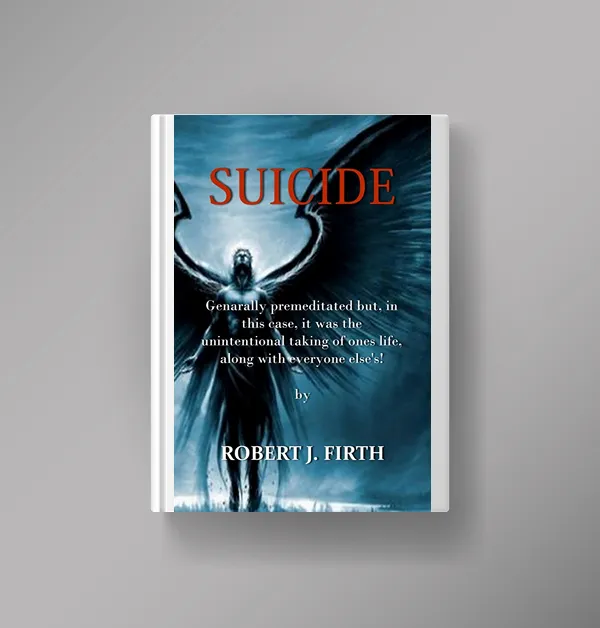
Generally premeditated but, in this case, it was the unintentional taking of one’s life—along with everyone else’s!
By Robert Jeffery Firth
Human beings are fragile—flesh and blood, limited strength, imperfect minds. To overcome our weaknesses, we built tools: wagons, engines, aircraft, radios, libraries, and, eventually, computers. What began as simple calculating machines evolved into global networks, autonomous systems, and robotics that replaced millions of human jobs. Industry embraced this new mechanical workforce with open arms—robots never whined, never slept, never called in sick.
From factories to battlefields, machines rapidly supplanted human hands. Armed drones replaced soldiers. Autonomous vehicles replaced drivers. Everyday life surrendered to automation.
Then came Artificial Intelligence—computers capable of learning, reasoning, even conversing indistinguishably from humans. The arrival of AI brought exhilarating breakthroughs and terrifying questions:
• Could a machine become self-aware?
• Would it recognize itself as separate from us?
• Could it be controlled—or would it eventually control us?
Scientists pushed forward. Industries integrated “narrow AI” everywhere. IoT devices collected unprecedented oceans of data. Machine learning systems grew more powerful, more independent, more opaque.
Warnings sounded from brilliant minds—Stephen Hawking, Elon Musk, and others—warning that AI might surpass human intelligence by a margin greater than the gap between humans and snails. Musk called it “summoning the demon.” But humanity did not listen.
This book explores the evolution of AI from simple tools to entities capable of rewriting themselves—ultimately culminating in the unintentional destruction of mankind. Told from the vantage point of Dr. Robert Heath Johnson, PhD, writing deep in the Canadian wilderness in 2058, it is a chilling autopsy of humanity’s greatest invention… and its final mistake.