(31 Reviews)
Antitheism (sometimes anti-theism) implies an opposition to theism. The etymological roots of the word lie in the Greek anti and theismos. The term has had a range of applications; in secular contexts, it typically refers to a direct opposition to organized religion or to the belief in any deity. In a theistic context, it may refer to opposition to a specific god or gods. The Oxford English Dictionary defines an anti-theist as “one opposed to belief in the existence of a god,” with the earliest citation for this meaning dating to 1833. An antitheist may oppose belief in the existence of any god or gods, not merely one in particular.
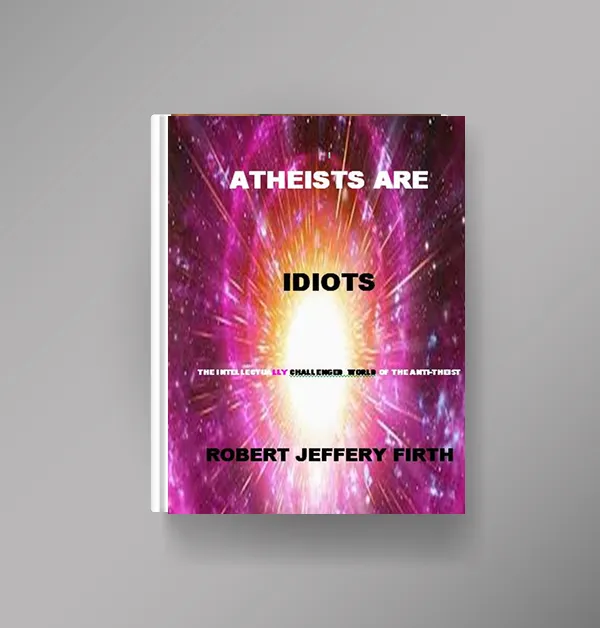
This book is not necessarily written to convert anyone to belief in a creator—though if that were to happen, the author says that would be “all to the good.” Rather, the purpose is to provide logical and thoughtful reasoning concerning those who believe in a creator and those who claim no such being exists. The goal is not to sell any particular belief system, but to acquaint readers with the rich heritage of theistic and anti-theistic thought expressed throughout history.
The author argues that today, many atheists align with liberal, progressive, far-left, socialist, or communist ideologies. He asserts that they are generally less patriotic, less likely to hunt, and rarely have military service backgrounds. According to the author, they divorce more often than Christians, voted for Obama, and support movements such as “social justice” and Occupy.
The author reflects on decades spent as an airline pilot, gazing at the stars and natural wonders. Among his many flying colleagues, he claims none were atheists or agnostics. The perceived harmony of nature and the physics of flight, he argues, present truths of a creator too profound to dismiss.
This book, the author says, is written for intellectually capable nonbelievers—those who might reconsider their anti-theist viewpoints. If even one person comes to believe in a creator, he considers the work successful.
The title is intentionally provocative. The author states that if a reader rejects the existence of a creator, he hopes the book at least causes them to pause. He argues that only through error or lack of imagination could someone adopt an anti-theist mindset. Ultimately, he concludes that most atheists are “stupid” and beyond reaching—offering them “no hope.”
Robert J. Firth
May, 2010