
(28 Reviews)
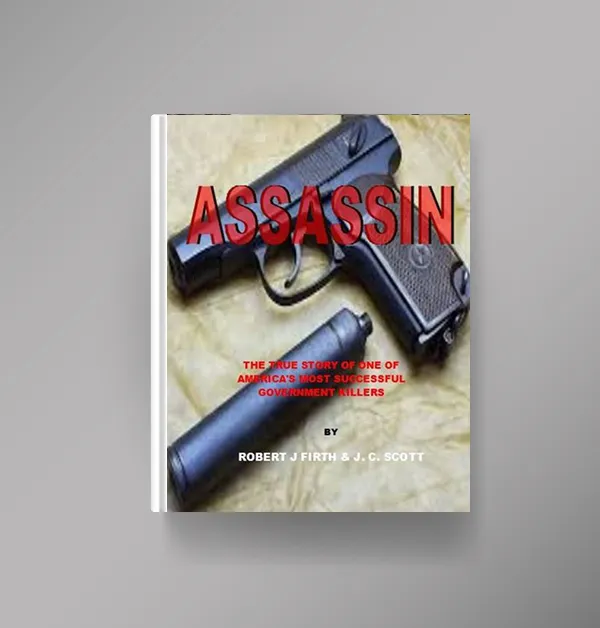
This is a factual, no-nonsense book as told to me by a professional American assassin. The stories he tells describe true events, with only a few names changed for obvious reasons. The author pulls no punches and never softens the narrative to make it more palatable. What you will read accurately reflects the preparation, dedication, training, and mindset of a man—and his associates—who kill America’s enemies for a living.
You will learn of actual events that you can independently verify if you wish. Much of the secret war against Islam that occurs right in your backyard, and indeed around the world, is never reported. The simple reason is that no one in the media has any idea such events have taken place. And if they did discover them, they would likely have to be taken care of.
Bodies are disposed of like the garbage they are. Nothing is left to indicate anything ever happened—cleanup teams ensure that. What you have read in other books written by men who never did the work—armchair adventurers, Walter Mittys—is make-believe. What you think you know from movies is childish fiction.
Your government and mine claim they do not assassinate their enemies. That is poppycock. They do, they always have, and they continue to do so. Without men like the individual telling this story, they could not. The “grey quiet men” do the killing while the fat fools pontificate and brag about their supposed virtues—all the while, their hands dripping in blood.
In this book, you will learn the concerns of the silent men who carry out this work. You will learn about their techniques, their weapons, and their plans for the future. You will be exposed to the real world of assassination—ugly, but never boring.
General Michael Jones-Varney, Rtd.
I first met John Scott in 1979 in Lagos, Nigeria, where he was “tying up a few loose ends.” I was flying there for an oil company, and he was aboard several of my flights. We met at the Swim and Racquet Club in Lagos and, over the years, became close friends. A few years ago, he asked me to help him write this book. As you read, you will learn what he meant by “tying up a few loose ends.”
Scott is a serious, quiet man—about 185 pounds, average height, sandy brown hair, shocking blue eyes—and he carries himself like the athlete he is. But the sport he excels in differs somewhat from those where gold medals are handed out.
Like many of America’s warfighters, John was born in a small southern town. He grew up hunting, fishing, and trapping. He was always more comfortable sleeping in the woods than in any house. John was given a gun at 14 and taught carefully to respect and fear its capability. He never misuses firearms. As he says, “All firearms are designed for one thing—killing. No one shoots to wound—that’s stupid.” Some people shoot targets, but real hunters do so only to ensure that when they shoot to kill, they do not miss.
John had a talent for languages that became apparent in high school. He studied Spanish and Russian at university. He was, and still is, extraordinarily strong and fast—faster and stronger than anyone I know. He can run forever and never tires. He has a sharp mind and is quick at math. Scott studied engineering and even worked as an engineer. His father, like mine, was a senior pilot with a main-line carrier, and that was truly what John wanted to do. After school, he gave up engineering and pursued flying.
Vietnam came along, and because the Navy paid for his education, he owed them four years of active duty or eight in the reserves. He was in the reserves, flying for a small Midwestern airline, when he was recalled to “visit the pearl of the Orient and kill some little yellow men.” Because he was a pilot, and because an alphabet agency needed pilots, he was seconded to this outfit and entered a dark, secret world—though at the time, I doubt he knew it.
Scott has now spent some 50 years in the killing business. He remembers each and every personal kill with great clarity. To a degree, he is still in the game, though it has changed significantly with evolving tradecraft. The organization is faster, quieter, better prepared, and far better armed—they have tools and weapons today I could never have imagined.
I will tell you John Scott’s life as he told it to me—in the first person—and we’ll see if you think it’s as glamorous and exciting as you and Ian Fleming imagined.
Robert J. Firth